
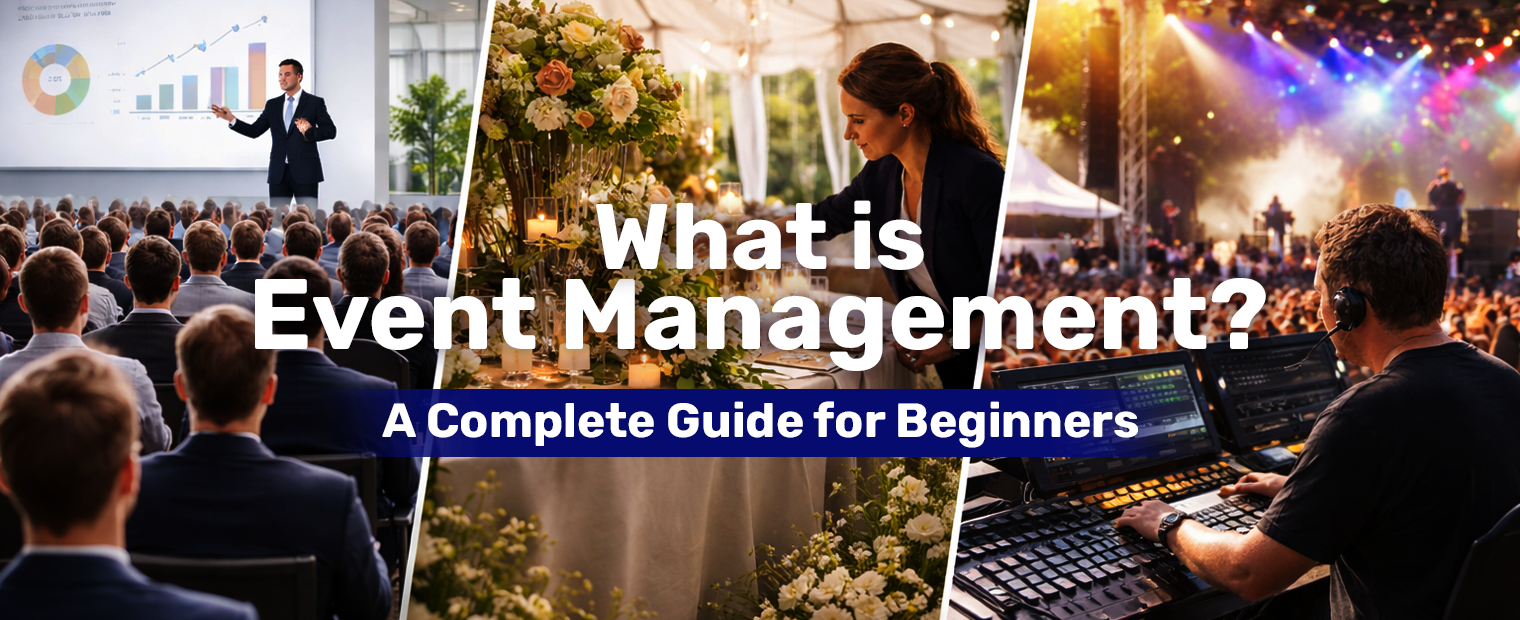
Do you know every concert, luxury wedding, exhibition or even brand launch that you attend is a result of detailed planning happening behind-the-scenes? There is a whole team and system that work relentlessly from coordinating vendors to managing timelines, to ensure everything runs smoothly for a seamless experience. Now this is where understanding what is event management becomes important, especially if you are a beginner who is exploring this field.
This blog is going to cover the basics of event management in a simple and practical way if you have just started exploring this field and are willing to learn more and build it as a career.
What is Event Management? Understanding the Basics
In simple words, event management is the process of planning, organizing and executing events efficiently. It transforms conceptual ideas into a tangible on-ground experience through strategic planning, management of logistics, people & timelines and end-to-end execution to deliver an effortless experience.
If you’re new to this field, you must know the basics of event management which means knowing how each small element contributes to the overall experience.
Events can include:
- Weddings
- Corporate events
- Concerts & festivals
- Brand activations
- Seminars & workshops
- Charity runs
Event management is all about turning your idea into a seamless real-world experience that leaves an impact on people and they remember it forever.
Introduction to Event Management: Types of Events You Should Know
There are different kinds of events in this industry that you should know as each of them requires a different approach, skill set and level of coordination. Let us have a glance at some of the key event categories before we understand the process, skills and how to start.
- Corporate Events: You must have seen companies often conduct various summits or product/service launches, these are all part of corporate events. Also includes conferences & seminars which are basically professional setups organized for the company’s branding & communication.
- Social Events: Unlike corporate events, birthdays and weddings are more emotionally-driven, personal gatherings that bring people together to celebrate life’s milestones and create memorable experiences for each other.
- Entertainment Events: These are large-scale public events such as music, film, arts, food and cultural heritage festivals which are held mainly to bring people together who share similar interests.
- Educational/Institutional Events: Schools and universities mainly organize these events like workshops, job fairs, alumni meetups, etc for their students to gain knowledge, network and grow professionally.
As a beginner, you should build a good understanding of these event management categories.
Event Management Process: Step-by-Step Breakdown
Do you know that every event that you are going to manage and be a part of follows a structured process? They may look effortless to the guests from the outside but the real deal happens behind-the-scenes.
If you are a beginner, you should understand the appropriate workflow structure of event management rather than just memorizing definitions so when you step out and start working in live events you are aware of how things actually work in a real environment. Below is a step-by-step breakdown of the event management process:
- Objective & Concept: Identify the objective of the event and set SMART goals. Then comes setting up the theme/concept and defining the target audience before planning anything else.
- Budget: This is the most crucial part and process when you start managing the event. It requires creating a detailed budget and allocating it across venue, logistics, caterers, vendors as well as for a contingency fund.
- Logistics: It’s an operational planning stage that involves organizing venue & transportation and managing decorators, caterers, technicians and other vendors for seamless event operations.
- Execution (Event Day): On-site coordination, check for unexpected issues and ensure everything runs smoothly as planned in real time
- Post-event analysis: Take feedback, gather insights, review performance and outcomes and evaluate those metrics against set goals & objectives.
Event Management for Beginners: Skills & Getting Started
Concerned about how it is going to be if you’re new to this field? The good news is that you do not need prior experience to begin since what matters the most is your willingness to learn, take action and adapt quickly. This profession requires you to stay dynamic, think out of the box and be open to challenges.
Skills:
- Communication: You need to constantly interact with clients and vendors to keep things on-point and on-time. Hence, communication skills are a must-have and you should start working on them if you haven’t yet.
- Time management: There are multiple tasks you need to handle simultaneously as one delay or procrastination can affect other things. You need to stay proactive and get the work done as per the deadlines.
- Problem-solving: Every event comes up with some unforeseen challenges and requires quick decision-making and real-time adjustments to resolve the issues and avoid any interruptions.
- Creativity: You get an edge if you have a creative mind. Each event requires a unique approach and concept to be designed and followed for a successful implementation and experience.
How to start (mini steps):
- First start with understanding the basics of event management and learn the basics through online sources or go for a professional course if you want to start strong
- Observe real events by volunteering in them either your local community events or college fests and know how they are executed
- Connect with experienced planners. Assist them and take up small responsibilities to get hands-on experience and gain confidence
- Build a small portfolio, explore and improve your learning curve and gradually become job-ready
In this field, learning happens fastest on the ground. So brace yourself to build a successful career in event management.
Conclusion
Now you know the simplest answer to what is Event Management – Planning + Coordination + Execution. As a beginner you should start with understanding the basics of event management and its process. Besides, enroll yourself in some course and start attending the events no matter how small or big, to experience and learn more. Because the demand for events is growing and so will opportunities.
So today is the right time to start building a strong foundation through a professional course to get practical exposure. Top event management institutes like IDEA Center offers certificate, diploma and bachelor’s in event management for beginners and working professionals too, and include a structured curriculum along with paid internships and 100% guaranteed job after course completion. They have industry mentors and several tie-ups to help you learn and grow through real-world experience. Because in event management, experience is your biggest teacher!
Admission 2026 open for Event Management Course | ENROLL NOW OR REGISTER FOR A FREE COUNSELLING SESSION